
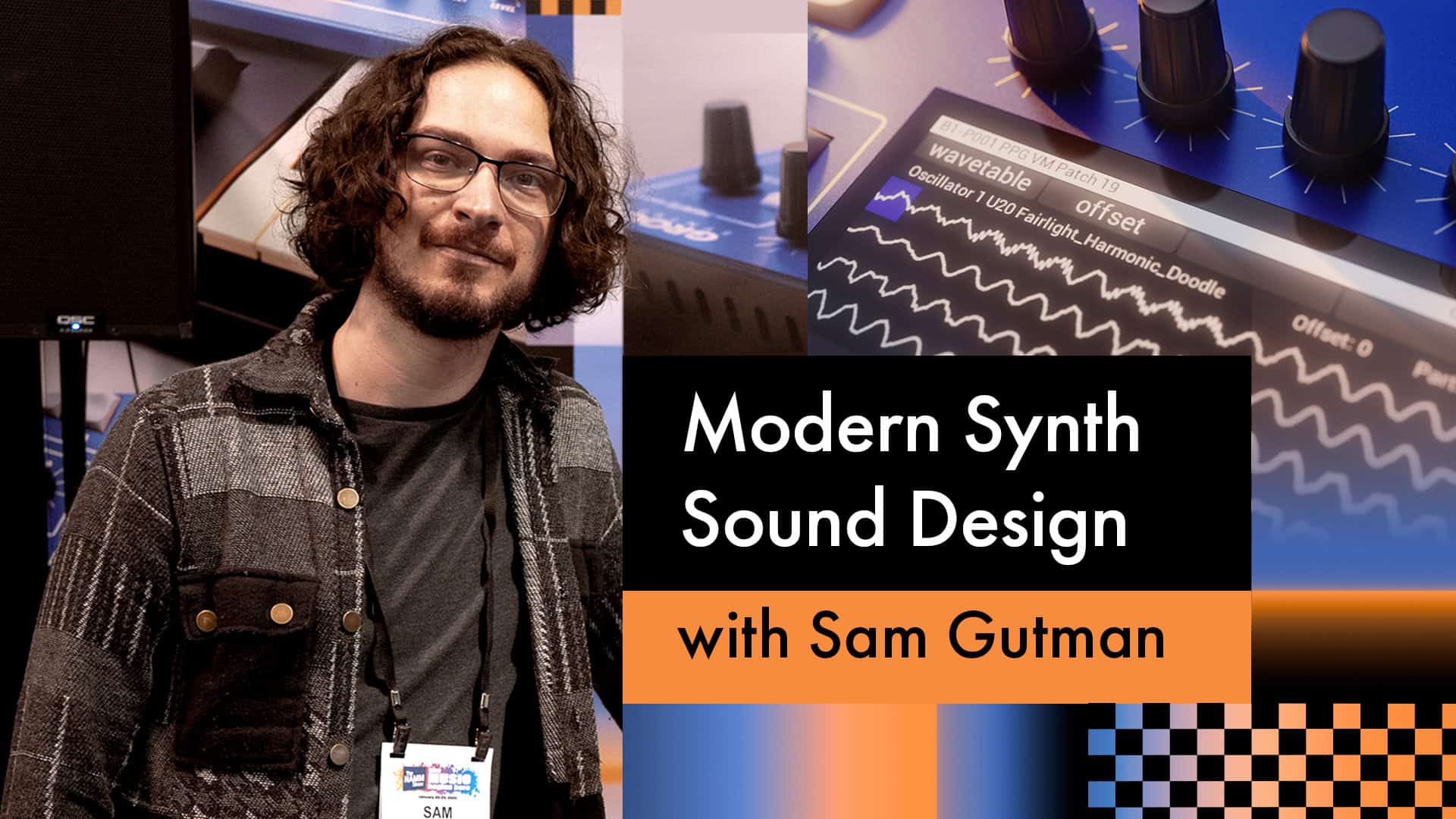
Modern Synth Sound Design on the 3rd Wave with Sam Gutman
Great sound design starts with knowing what you need a sound to do. Whether that’s holding its own on a festival stage, sitting right in a mix, or becoming something entirely new in the studio, the goal is always the same: make it musical.
Sam Gutman knows that process from both sides. As a keyboardist and sound designer whose credits include touring with Ms. Lauryn Hill, The Fugees, and YG Marley, he moves between stage and studio with an ear for what makes a patch truly work in context. We asked him to put the 3rd Wave through its paces at NAMM 2026, and the result is a 20-minute deep dive into what modern synth sound design looks like through the eyes and ears of a working musician. As Sam puts it early in the session:
“It does a whole lot more than wavetables. It goes way deeper than maybe you thought.”
Five Synthesis Methods, One Instrument
The session is structured around the five synthesis methods built into every 3rd Wave voice, and Sam demonstrates each one with musical examples that showcase both the character and the practical applications of each approach.
He starts with classic PPG wavetables, the synthesis method most closely associated with the 3rd Wave’s heritage. As Sam explains, “The 3rd Wave replicates all that stuff really well, but it shines in the way in which it’s an evolution of the PPG, not just a replica.” From there, he moves into modern wavetables with their morphing and import capabilities, explores analog subtractive synthesis through the 3rd Wave’s virtual-analog waveforms and analog filters, ventures into FM synthesis territory for more complex timbres, and rounds things out with the sampling engine that often surprises people who think of the 3rd Wave primarily as a wavetable synth.
What ties it all together is Sam’s musical instinct, showing how each synthesis method sounds in context and why you’d reach for one approach over another.
Digging Into Layers
Things get especially interesting when Sam moves beyond individual synthesis methods and into layering. As he explains, “On this synth, you have four layers of legitimately everything. That’s an astounding amount of power to have with something that’s a knob-per-function interface, where kind of what you see is what you get.” The 3rd Wave’s architecture allows you to combine all five synthesis methods per oscillator, across multiple voices and parts. Sam demonstrates how this works in practice, building complex, evolving patches that show the depth available when you start stacking these tools together.
This is where the 3rd Wave’s design philosophy really comes through: You can choose between the five synthesis methods to combine, layer, and morph sounds within a single patch.
Bob Coover on Binaural Sound
Towards the end, our co-founder and DSP designer Bob Coover joins for a segment on the 3rd Wave’s binaural sound capabilities. He challenges the audience directly: “Tell me if you are hearing effects, because this thing also does binaural sound.” The answer, as Bob demonstrates, is that the 3rd Wave’s wide, immersive stereo image comes not from effects processing but from the way voices are distributed and modulated across the stereo field.
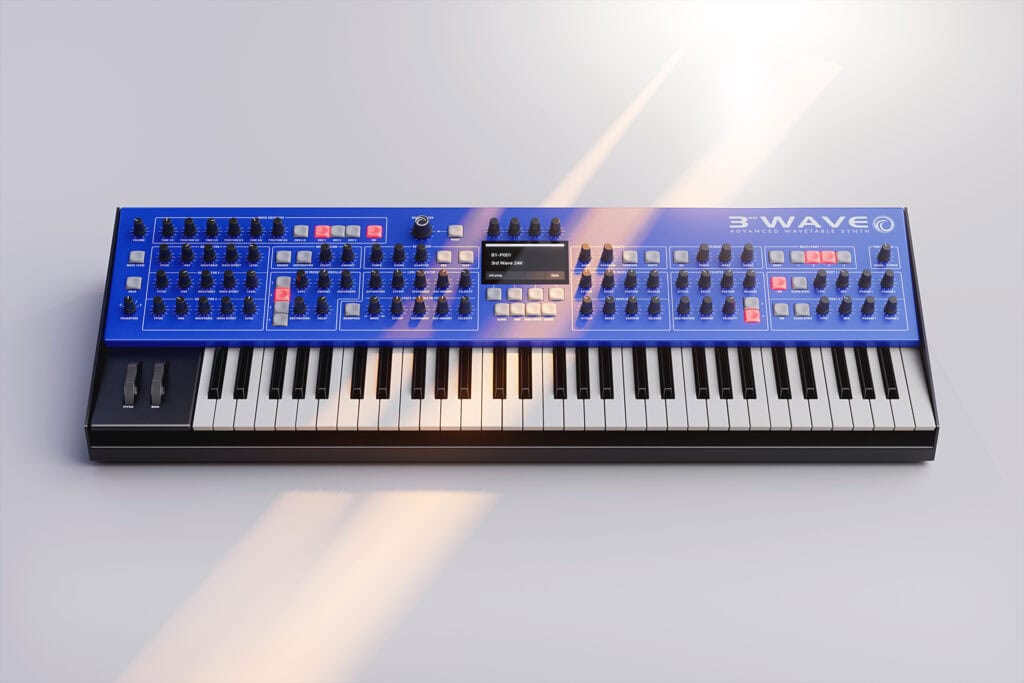
Which 3rd Wave Is Right for You?
The 3rd Wave is available in three configurations, all of which share the same premium sound engine, including five synthesis methods per oscillator, individual analog filters per voice, and patch compatibility across the lineup. Whether you’re drawn to the flagship 24K keyboard, the 24M desktop module, or the compact 8M, you’re getting the same core sound that Sam demonstrates in this video.
Not sure which one fits your setup? We put together a guide to help you decide:
Which 3rd Wave Is Right for You? Choose Your Groove!
About Sam Gutman
Sam Gutman is a keyboardist, producer, and sound designer whose touring credits include Ms. Lauryn Hill, The Fugees, and YG Marley. His approach to synthesis is rooted in creating sounds that work on real stages and in real productions. Learn more about Sam’s work on Instagram and YouTube.